

How proton therapy works
The physical mechanism that explains how protons act within the tumour

Proton therapy offers three clinical advantages over other forms of radiotherapy: reduced toxicity to healthy tissue, greater precision in dose delivery, and better local control of the disease. It is particularly suitable for tumours in difficult-to-treat locations, those situated near critical organs, and for children, where minimising long-term side effects is a priority.
Do you need us to help you?


Complete this form and our specialists will contact you to discuss the case.
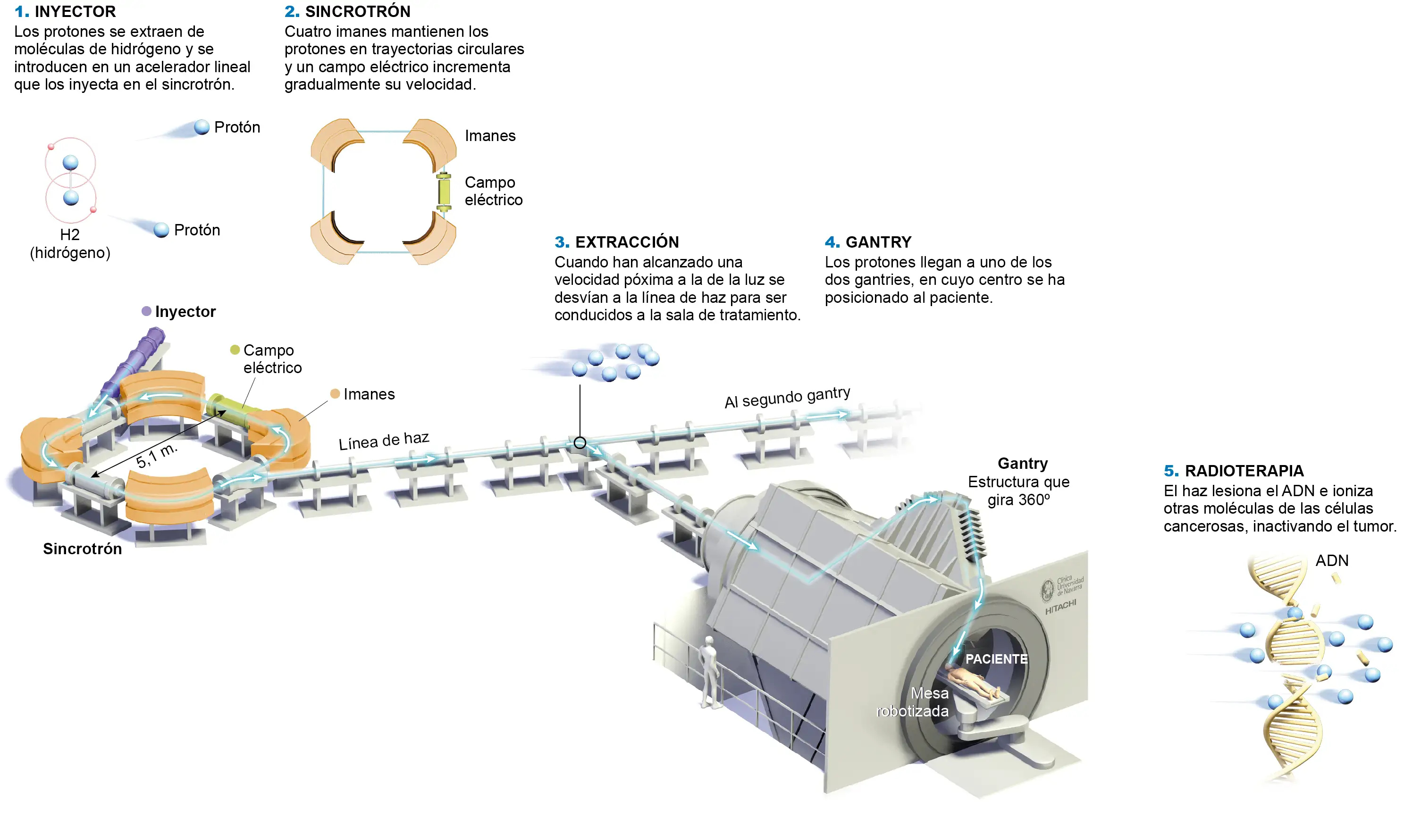
How proton therapy equipment works
The difference between proton therapy and conventional radiotherapy
Conventional radiotherapy uses a high-energy beam of X-rays — photons — to treat the tumour. Proton therapy, on the other hand, uses a beam of high-energy accelerated particles — protons — which, due to their mass, do not deviate from their path towards the tumour.
This allows them to direct most of their energy straight into the tumour and, thanks to their abrupt stopping property — the Bragg peak — to stop there without irradiating the surrounding tissues.

Radiation Oncology


